

- Trump's rift with Kyiv and easing of Russian diesel sanctions drives Ukraine toward China as alternative mediator.
- Chinese commentators portray Beijing as a unique mediator due to ties with Moscow and neutrality outside Western sanctions.
- China may limit involvement to economic ties and promoting talks, avoiding direct decisions or security guarantees for Ukraine.
As U.S.-Ukraine relations sink to one of their lowest points in years, Chinese nationalist commentators are casting Beijing as an unlikely lifeline for Kyiv. With President Donald Trump easing sanctions on Russian diesel and publicly criticizing Ukrainian President Volodymyr Zelensky, they argue that China may be one of the few powers capable of brokering an end to the four-year war.
Citing what they see as waning European support and an increasingly unreliable Washington, the commentators have pointed to Ukraine’s renewed diplomatic outreach to Beijing as evidence that Kyiv is growing increasingly desperate for China’s help.
Ukrainian Foreign Minister Andrii Sybiha met China’s ambassador, Ma Shengkun, in Kyiv last week. The two “exchanged views on steps China could take to facilitate a prompt peaceful settlement,” Ukraine’s Foreign Ministry said, adding that “the Ukrainian side counts on Beijing’s constructive role.”
China’s much shorter readout, however, made no mention of peace negotiations, saying only that the two discussed bilateral relations and practical cooperation.
Sybiha also reiterated in an interview with Ukrainian state news agency Ukrinform that he had received an invitation to visit China and hoped the trip would take place, although Beijing has not publicly confirmed the invitation.
“We are counting on China to play a more active role. We believe Beijing could be very effective,” Sybiha said, adding that the two countries had much to discuss, from peace efforts to bilateral trade.
Trump’s Widening Rift With Kyiv
The narrative comes amid one of the sharpest deteriorations in U.S.-Ukraine relations since Trump returned to office.
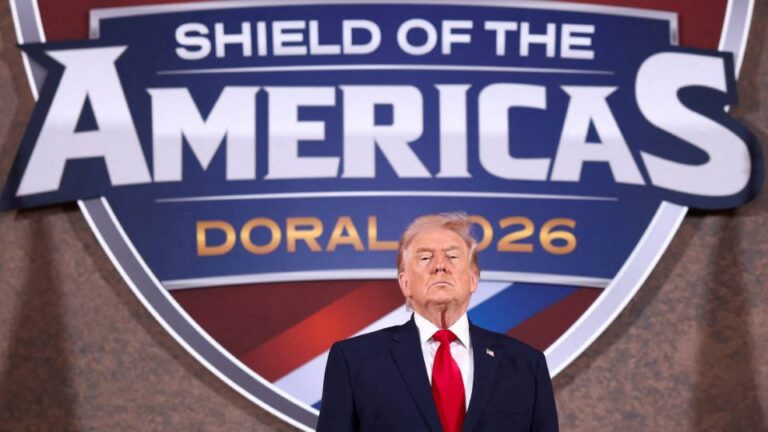
Trump announced a deal with Russian President Vladimir Putin earlier this month to allow Russian diesel sales to the United States and global markets, temporarily easing sanctions on Moscow as fuel prices surge ahead of the U.S. midterm elections.
Zelensky condemned the agreement as “an investment in a war that must be ended,” warning that it would provide Moscow with more resources to continue its invasion.
Trump, in turn, accused Zelensky of obstructing peace efforts and declared that it was “time for Ukraine to get a new president.”
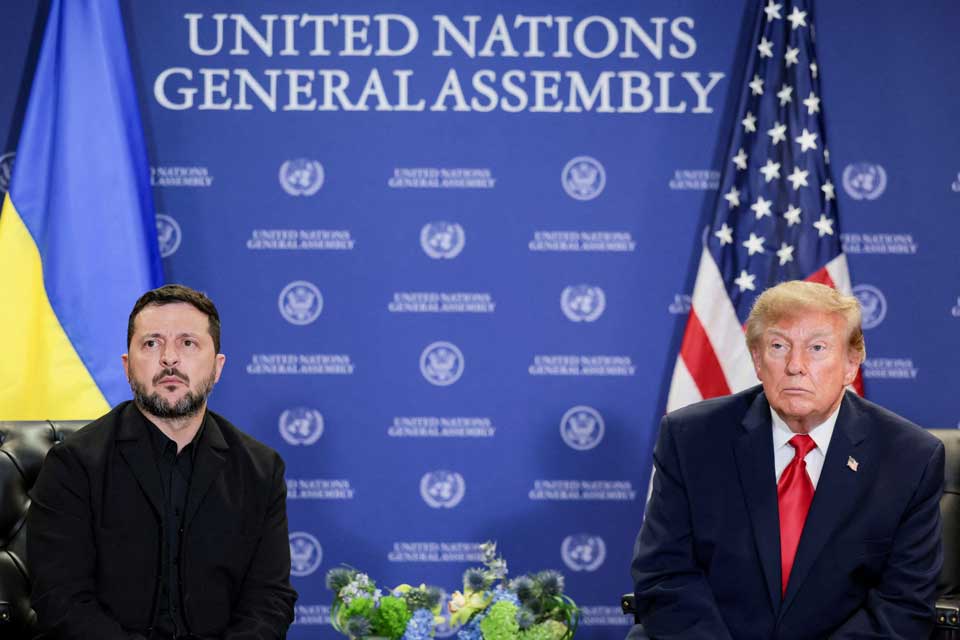
Ukraine also faced disruptions to U.S. intelligence sharing and restrictions on Starlink and Starshield satellite services that hampered its drone operations. Ukrainian officials suspected the restrictions were intended to pressure Kyiv to halt strikes on Russian oil refineries.
In an interview with Fox News, Zelensky signaled openness to freezing the conflict along its current front lines as a way to halt the fighting, before seeking security guarantees from Washington and European allies.
A Diplomatic Opening for Beijing?
The tensions have also raised the prospect of peace negotiations in China that could exclude Ukraine.
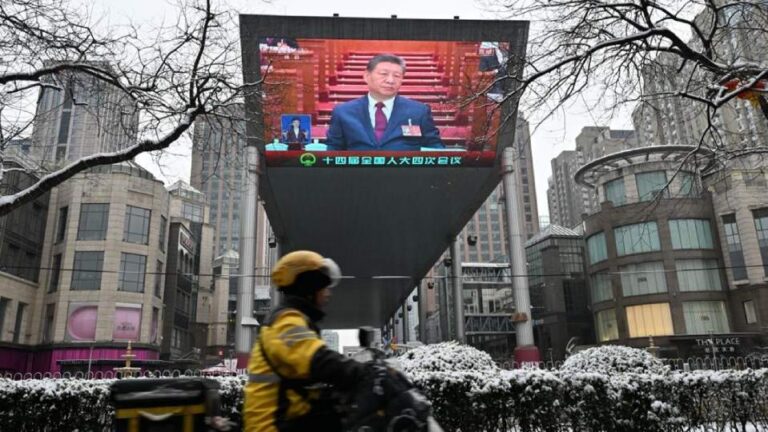
In a phone call with Trump, Putin has proposed meeting Trump and Chinese President Xi Jinping on the sidelines of next month’s Asia-Pacific Economic Cooperation summit in Shenzhen to discuss ending the war, the Wall Street Journal reported. The proposed meeting would exclude Zelensky.
Zelensky has insisted that Ukraine must participate in any talks concerning its future. Asked whether Beijing would include Kyiv, the Chinese Foreign Ministry reiterated China’s support for peace negotiations but said it had “no information to provide” about a possible trilateral summit.
For Chinese commentators, the developments signal a potential shift in diplomatic influence away from the West and toward Beijing.
With Europe’s mediation efforts faltering and Washington’s interests increasingly diverging from Kyiv’s, Ukraine has little choice but to seek alternative diplomatic channels, said Zhanqing Shaosuo (战情哨所), a Chinese WeChat military and geopolitical commentary account.
China, it said, is among the few major powers that maintain close ties with Moscow while remaining outside NATO and Western sanctions, putting Beijing in a unique position to mediate the conflict.
“Ukraine’s willingness to seriously discuss peace with a non-Western power during wartime shows that peace plans no longer have to be drafted solely by Europe and the United States,” it wrote, calling the development “the clearest sign of the retreat of the unipolar order.”
Beyond the geopolitical symbolism, commentators pointed to practical reasons Kyiv might seek Beijing’s help.
China is Ukraine’s largest source of imports, accounting for roughly 30 percent of its purchases from abroad during the first nine months of 2026, according to Ukrainian customs data. Chinese-made electronics, batteries and other components are also important to Ukraine’s drone industry.
“After fighting for the United States for more than four years, Trump is ready to sell Ukraine out,” wrote Rongping, a nationalist WeChat account focused on international affairs. “Now Ukraine has come knocking on China’s door.”
Rongping suggested Kyiv might be seeking Beijing’s backing to prevent a peace agreement negotiated without Ukrainian participation, as well as China’s help in securing a seat at possible international negotiations, including talks on the sidelines of the APEC summit.
It also speculated that Ukraine could be exploring China’s potential role in postwar reconstruction and security guarantees, saying that Beijing’s influence over Moscow might help deter future Russian aggression.
Limits of China’s Involvement
Yet even commentators celebrating China’s growing diplomatic influence expressed skepticism that Beijing would offer Ukraine meaningful assistance.
“China will not draw any red lines for Ukraine, nor will it make decisions on Ukraine’s behalf,” Rongping wrote, arguing that Beijing had little incentive to provide additional diplomatic support, given its longstanding policy of noninterference and reluctance to take sides in the conflict.
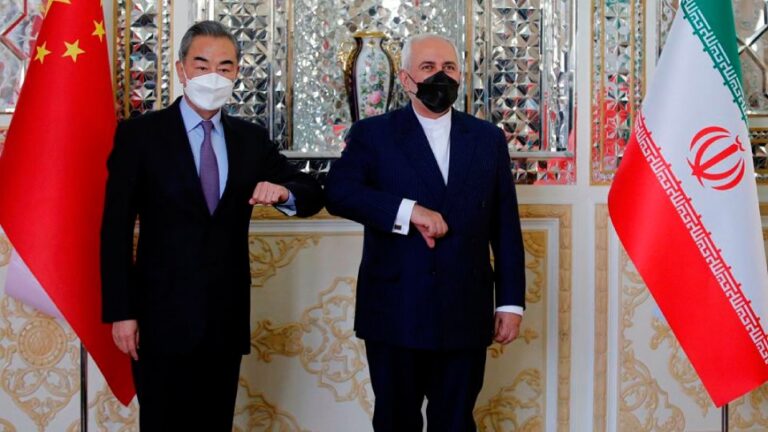
At the Munich Security Conference in February, Chinese Foreign Minister Wang Yi emphasized the limits of Beijing’s involvement.
“China is not a party to the conflict and therefore does not hold decision-making power over its outcome,” he said. “What China can do is promote peace talks.”
Instead, China could serve as a “stabilizer,” Rongping said, maintaining economic ties with both Russia and Ukraine while encouraging peace negotiations.
That would mean continuing to buy Ukrainian grain, supply Kyiv with electronic components and maintain energy and trade relations with Moscow, without pressuring Russia on Ukraine’s behalf.
“Russia’s economic lifeline has not been severed, and Ukraine has not been completely cut off,” it said. “Both sides still have a breath left, and that breath is what keeps everything from collapsing.”