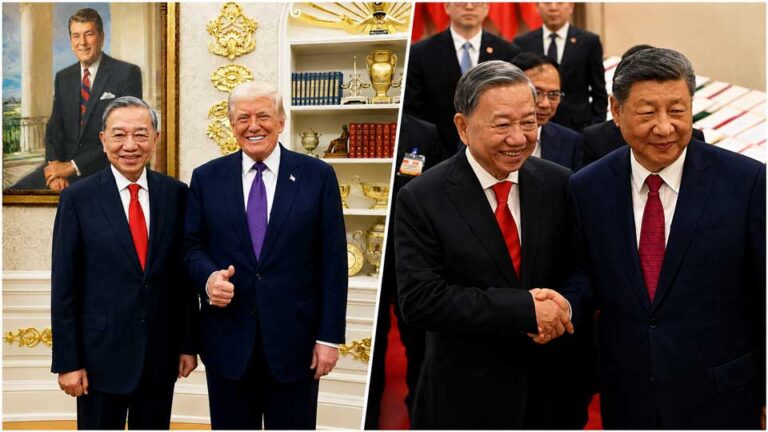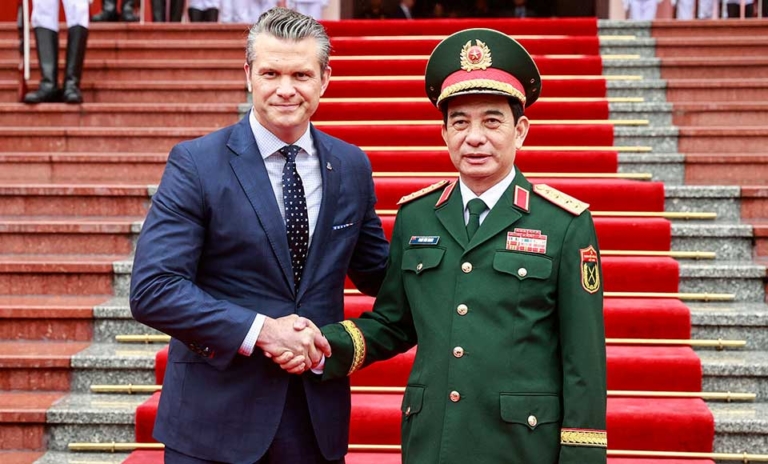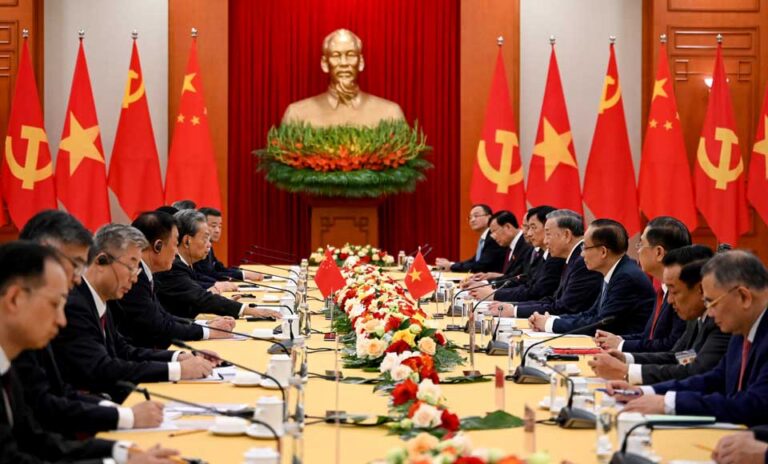


- Washington expects closer ties with Vietnam to balance China; Hanoi sees ties strengthening its autonomy and relations with China.
- Arms embargo lift and upgrading to a Comprehensive Strategic Partnership were read by Washington as distancing from China; Hanoi called them normalization.
- The expectation mismatch risks misinterpreting Vietnam’s moves as alignment against China; both capitals need sustained communication to avoid damaging ties.
In this edition of M&M, I want to explore the differences between what the United States and Vietnam expect from their bilateral relationship. The process of reconciliation between Washington and Hanoi has often been praised as “nothing is impossible,” in the words of former U.S. Ambassador to Vietnam Ted Osius.
However, not everything is possible. The United States and Vietnam still differ over trade, defense cooperation, and, most importantly, their respective policies toward China. Understanding where Washington’s and Hanoi’s interests overlap matters for gauging the prospects and limits of cooperation.
What is the Misperception?
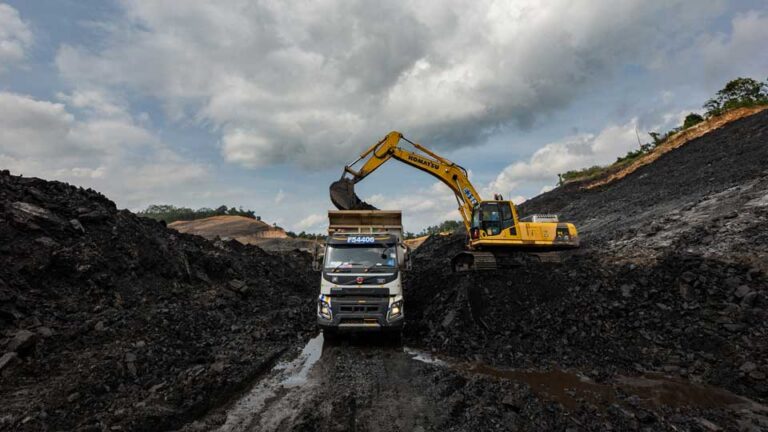
The misperception is that because the United States and Vietnam are concerned about China’s rise, they will find a common denominator in balancing against it. Such a common denominator guides all aspects of the bilateral relationship. Higher trade volume bolsters Vietnam’s economy and makes it more resilient against China.
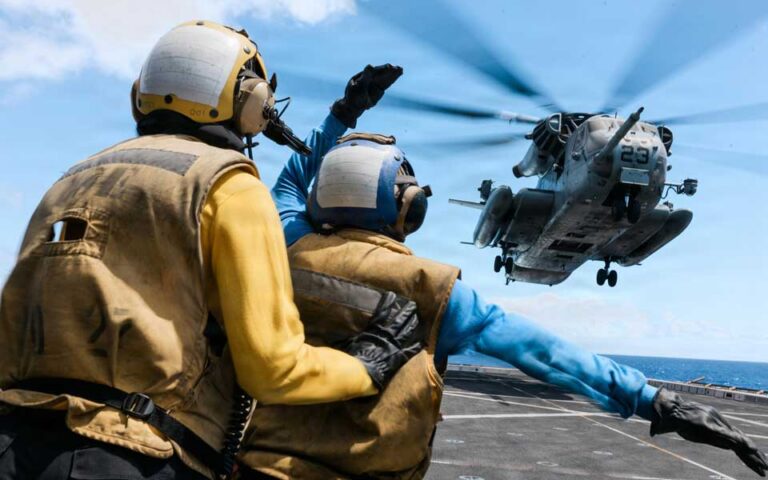
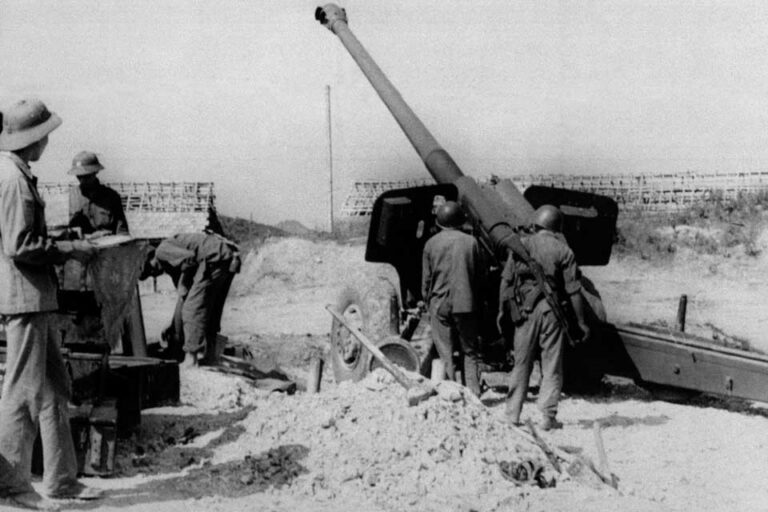
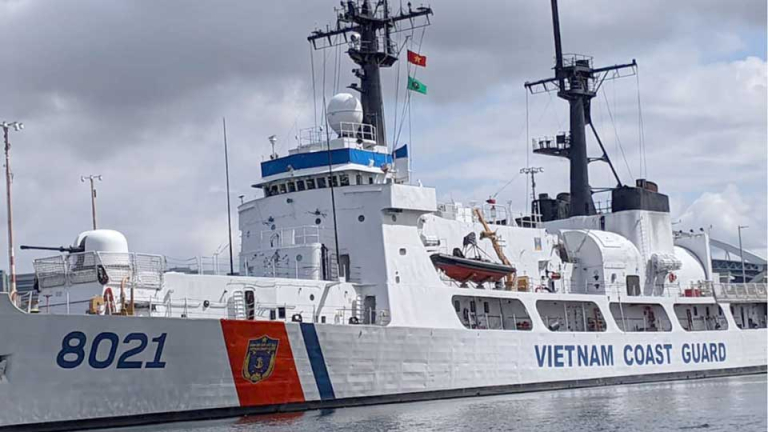
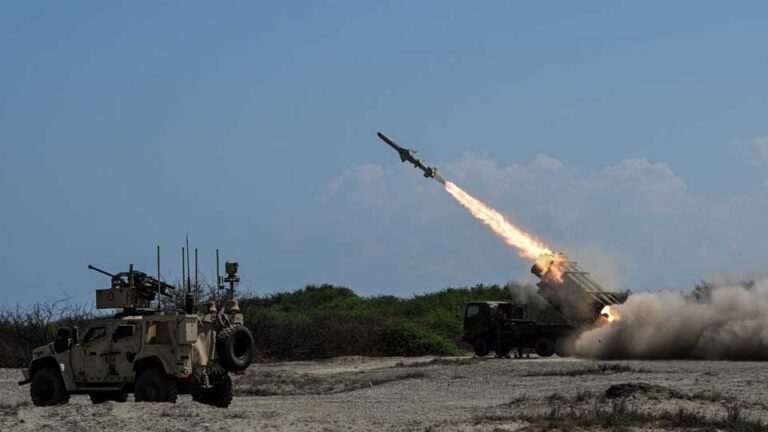
Lifting the lethal arms embargo against Vietnam is to give it more options beyond the traditional arms supplier, Russia, and to gain a qualitative advantage over China, considering that China also buys Russian arms. Elevating Vietnam’s profile in U.S.-led international institutions gives it a stronger voice in condemning China’s bullying. Frequent U.S. port calls to Vietnam assure Hanoi that the U.S. maintains a robust presence in the Asia-Pacific and that Vietnam is not alone in standing up to China.
The closer U.S. relations with Vietnam become, the more the United States expects Vietnam to contribute to U.S. security objectives in the Asia-Pacific.
Why Do People Believe It?
Since the end of the Cold War in 1991, the United States has conceptualized Vietnam as a partner in containing China’s rise. When the Bill Clinton administration lifted the trade embargo against Vietnam in 1994 and later normalized ties with it in 1995, many American watchers saw the decision as a move to increase U.S. influence in Asia via Vietnam.
The U.S. strategic interest in a stronger relationship with Vietnam outweighed pushbacks from U.S. veterans and anti-communist Vietnamese Americans. U.S. policymakers’ remarks regarding Vietnam give the impression of the United States counting on its bases and naval capability in a future war with China. Vietnam’s pushback against Chinese bullying signals that Hanoi is receptive to Washington’s outreach. Vietnam has welcomed better trade relations, stronger defense cooperation, and frequent U.S. port calls. Washington interprets every upgrade in relationship with Vietnam as a step distancing Vietnam from China.
What Does the Evidence Show?
This perception isn’t entirely wrong, but it doesn’t tell the whole story. The United States expects a stronger relationship with Vietnam to result in Vietnam being part of a U.S.-led anti-China coalition involving Japan, South Korea, the Philippines, and Thailand.
However, Vietnam expects a stronger relationship with the United States to strengthen its own relationship with China. Washington and Hanoi both want to strengthen bilateral ties but differ on what a stronger relationship will entail.
This mismatch shows up in how each country interprets specific milestones. Washington tends to view them from a trilateral perspective involving China, while Hanoi interprets the milestones purely in a bilateral context to avoid antagonizing China.
For instance, when the United States lifted the arms embargo against Vietnam in 2016, many in Washington interpreted the move as Vietnam edging closer to the United States and away from China.
Some watchers even speculated that Vietnam would welcome the U.S. military back to Cam Ranh Bay in exchange for lifting the embargo. Vietnam perceived the milestone differently. It saw the lifting as one of the last steps of fully normalizing diplomatic ties with Washington. Shortly after, Vietnam welcomed Chinese warships to visit Cam Ranh Bay. That same year, Vietnam became China’s largest trading partner in ASEAN.
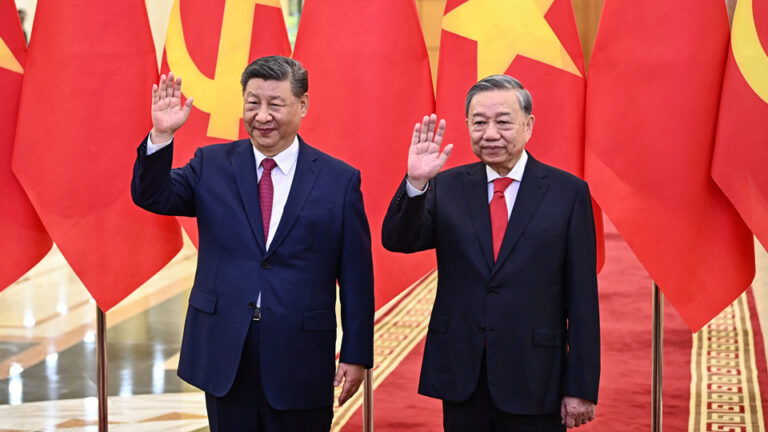
Another milestone came in 2023, when Vietnam upgraded the U.S.-Vietnam Comprehensive Partnership to a Comprehensive Strategic Partnership. Observers in the United States interpreted the leapfrogging as Vietnam inching closer to the United States and away from China. On the contrary, Vietnam stuck to its script: better relations with Washington do not constitute a threat to a third party.
The United States and Vietnam also clash over what a trade deal means. The Donald Trump administration has conditioned a trade deal with Vietnam on Vietnam reducing its imports of Chinese material (“transshipment”).
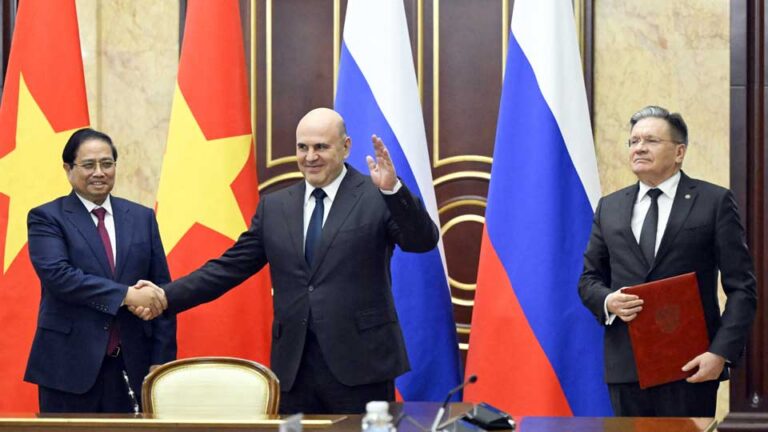
Vietnam again perceives a trade deal as a purely bilateral affair. It proposes purchasing more U.S. technological and aerospace products, not reducing Chinese imports, to correct the massive trade imbalance.
How can Vietnam strengthen relations with China via stronger ties with the United States? Vietnam’s multilateral foreign policy aims to reduce its dependence on any single country. Vietnam learned this lesson from its overdependence on the Soviet Union during the 1970s and 1980s, which led to an economic crisis after the Soviet collapse.
When Vietnam is confident it has backup options, it can deepen ties with China without worrying that China will weaponize Vietnam’s dependence. Essentially, Vietnam’s multilateral foreign policy is to avoid getting trapped in a zero-sum game between Washington and Beijing and instead turn it into a positive-sum game for itself.
What Does This Mean?
The danger of this expectation mismatch is that the United States will interpret any of Vietnam’s moves not in the U.S. interest as Washington “losing” Hanoi, even though Hanoi was never the U.S. to lose in the first place. Just because Vietnam opposes China’s bullying in the South China Sea doesn’t mean it will side with the United States.
Washington and Hanoi need to be mindful of this mismatch in expectations. If the United States expects Vietnam to side against China when China-Vietnam ties are amicable, it can damage relations with Vietnam, as Vietnam doesn’t want to antagonize China.
If Vietnam expects the United States to understand that strengthening ties with the U.S. also strengthens Vietnam’s ties with China, it risks being seen as perfidious in Washington. More U.S.-Vietnam communication is key.