

- Facility signals political influence of China in Laos, more than expanded PLA operational reach, says Hunter Marston.
- Rough 2,000 meter runway at Ban Keun can be extended; a 3,000 meter expansion would allow larger PLA aircraft and long range bombers.
- China uses investment and debt to build influence, not explicit coercion; watch future arms sales to Laos and inroads with Thailand.
China’s military has set up an aviation training center in Laos, at Ban Keun airport about 50 kilometers north of the capital, Vientiane. China’s defense ministry, which announced the China-Laos Joint Support and Training Center and China-Laos Friendship Aviation Academy on September 29, said they will train Lao air force pilots and are “not directed against any third party.”
The center joins a small overseas footprint for the People’s Liberation Army (PLA): a naval support base in Djibouti and access to Cambodia’s Ream Naval Base. Chinese military commentators describe Ban Keun as China’s first overseas joint training facility built around its air force.
“I don’t think this does a great deal to expand China’s operational range across Southeast Asia. What it does indicate, though, is China’s political influence in Laos.”
Hunter Marston, director of the Southeast Asia Program at the Lowy Institute and project lead for the Asia Power Index, joined the China-Global South Podcast to discuss the new facility in Laos. He argues that the facility’s political significance outweighs its military capabilities.
A Runway With Room to Grow
Satellite images reviewed by Reuters show what analysts believe are eight K-8 light attack jets, also known as the JL-8, on a runway still under construction, plus more than two dozen support vehicles. Both the Chinese and Lao air forces fly the K-8. None of China’s frontline fighters were visible.
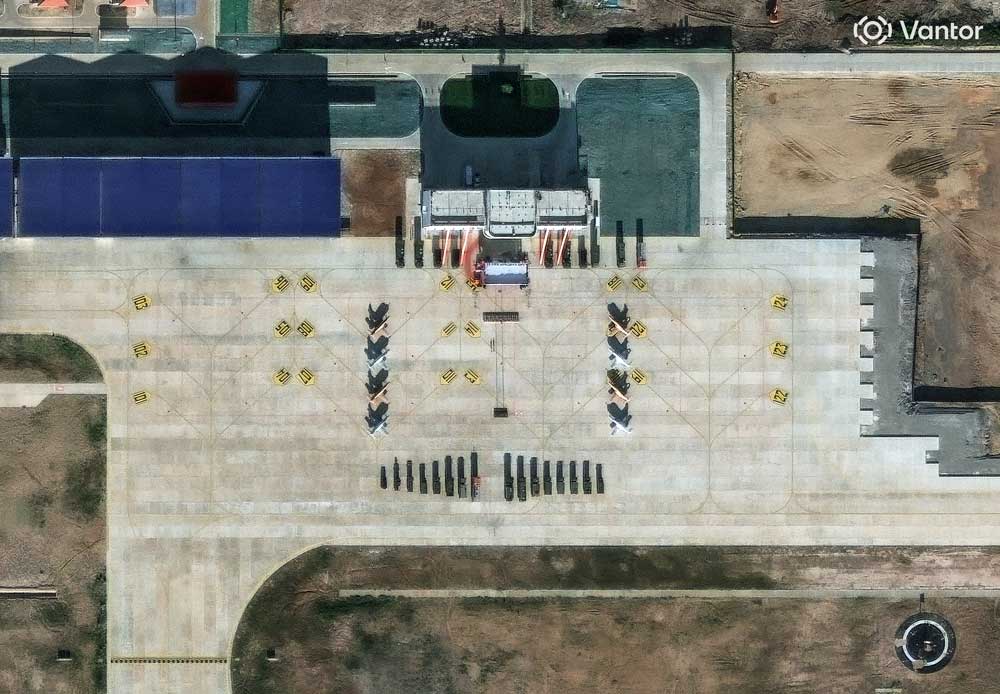
“I think it’s too early to say for certain how this facility will be used in the longer term,” Marston said. The roughly 2,000-meter runway “is long enough to land most of the fighter jets in China’s PLA Air Force arsenal, but it’s short of the length required to launch longer range bombers like the H-6.” For now, he said, it “seems more generally to be just infrastructure with potential to grow in the future.”
That potential is what analysts are watching. The airfield “has been engineered to accommodate a runway extension allowing larger aircraft to operate,” Alexander Neill of the Pacific Forum told Reuters.
Why Laos, and Not Cambodia
Cambodia’s Ream Naval Base received a Chinese-financed upgrade, but it “has also been open to other navies, including the United States and Japan,” Marston said. Phnom Penh’s leaders “recognize that too much reliance on China potentially exposes them to coercion.”
“Lao, on the other hand, is relatively open to Chinese investment and infrastructure,” Marston said. The site also extends Chinese reach southwest, allowing “the prepositioning of certain assets that would allow it to reach more easily the Indian Ocean and further into South Asia. So that’s where I’d keep my eye in the future.”
Beijing Has Replaced Hanoi as Vientiane’s Closest Partner
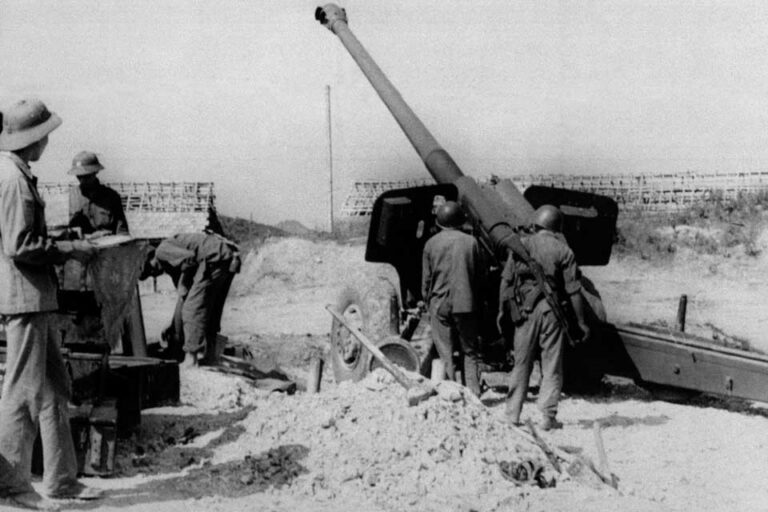
Vietnam was long Laos’s trusted security partner, bound by a shared revolutionary struggle. After China’s 1979 invasion of Vietnam, Marston said, “It took a long time to rebuild that political trust and ties with China, more than a decade, actually.”
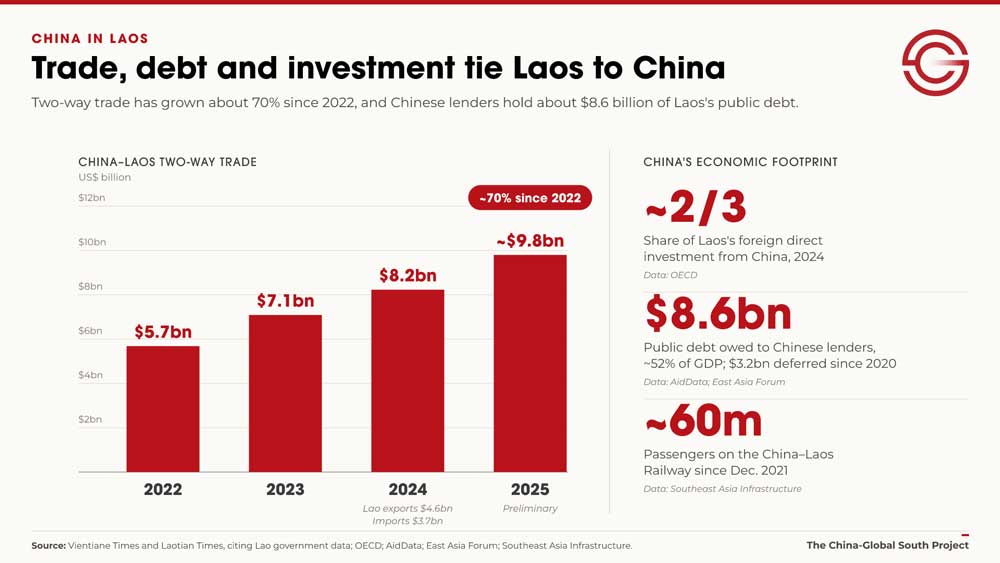
China now provides roughly two-thirds of Laos’s foreign direct investment and holds about half of its external government debt. “That gives it an enormous amount of political sway,” Marston said. A proposed “3+3” dialogue between the two sides is “really indicative of the deepening political and security trust.”
Marston has seen no evidence of Beijing trading debt for security concessions. “It’s not as clear as leveraging debt so much as buying goodwill, which is a familiar approach to great powers around the world.”
A Remarkably Quiet Reaction
The facility has drawn little public reaction in the region. Vietnam has been “very calm,” Marston said. Prime Minister Lê Minh Hưng visited Vientiane on October 8 to reaffirm ties with Laos “rather than chastising them.”
That contrasts with 2019, when reports on Ream set off what Marston called a “five alarm fire” in Washington. This time, he said, “it’s been a pretty quiet international response. And that could just be because Lao is already regarded as something of a Chinese proxy state.” Laos is also landlocked, so the facility lacks the maritime implications of Ream or China’s outposts in the South China Sea.
Marston described China’s pursuit of overseas military access as “a scattershot approach” that “involves a little bit of hedging your bets. They’re not going all in on any one of these.”
What to Watch: The Runway, the Arms Sales and Thailand
The first thing Marston is watching is whether the runway gets longer. “Does China expand the runway to 3,000 meters, which would allow it to land long-range bombers? And if so, where is it going to send those bombers?”
The second is commercial. China has been Thailand’s primary arms supplier since 2016, and Marston expects more sales to Laos too. “The Air Force is a natural entry point for greater Chinese exports of air equipment,” he said. Sell the jets, then build the school that teaches pilots to fly them.
The third is Thailand, a US treaty ally, but Marston said the two “really have very little common political ground,” held together mainly by military-to-military ties and exercises like Cobra Gold. “If China were to make inroads building on its already very strong economic and political ties to replace or supplant the United States’ security role with Thailand, that would be, I think, a significant change of the balance of power in the region.”
For now, Ban Keun’s military capabilities remain limited. Its significance lies in what it reveals about China’s approach in mainland Southeast Asia: a military presence built incrementally and opportunistically, alongside partners already tied closely to Beijing through trade, investment and debt.
Watch the full conversation on the China-Global South Podcast and read Hunter Marston’s analysis, “What to make of China’s new air facility in Laos,” in the Lowy Institute’s Interpreter.